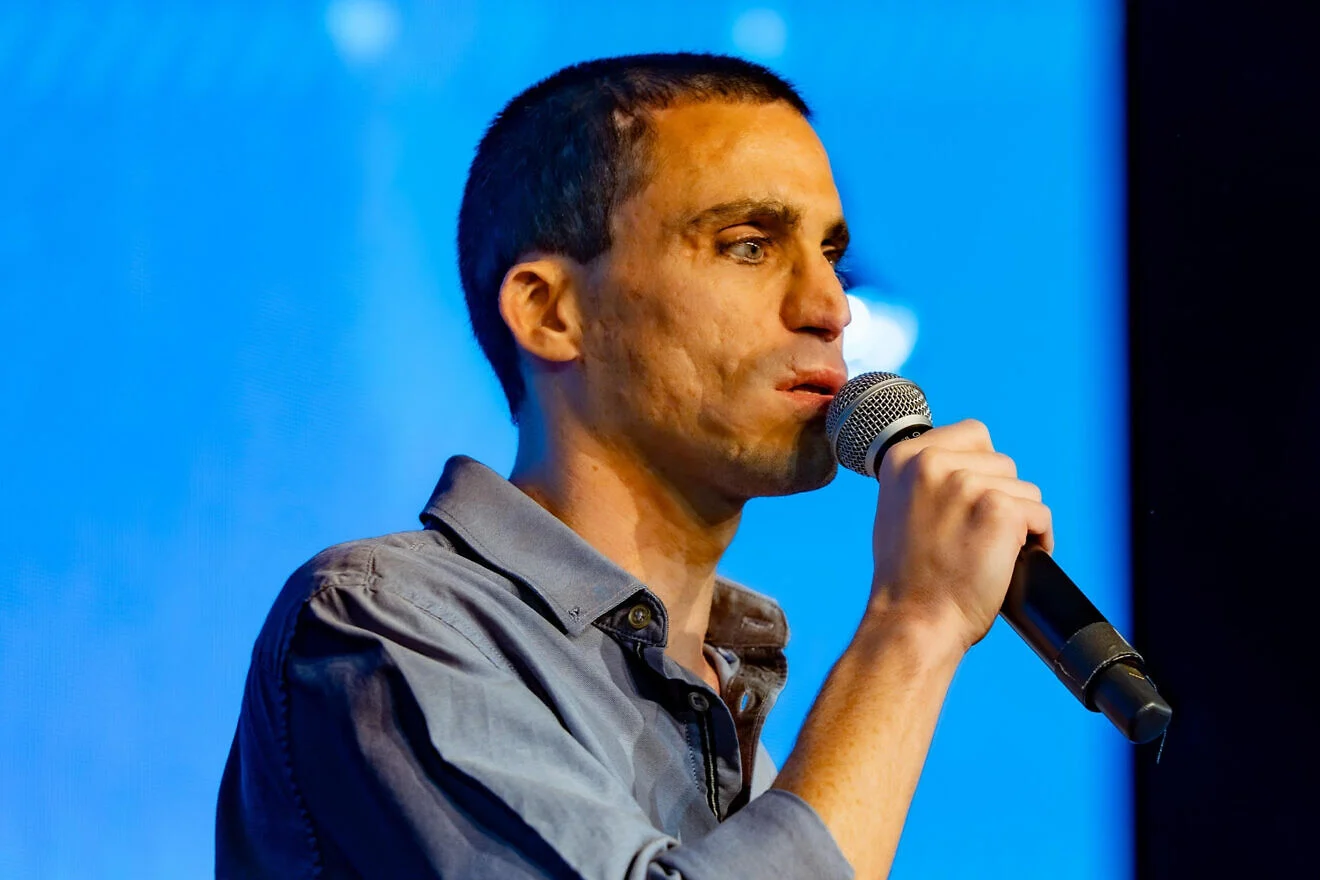
Oran Almog told JNS that he supported the hostage deal even though it released the mastermind of the terror attack that killed his family members.
By Aaron Bandler | Jewish News Syndicate | December 9, 2025
In October 2003, Oran Almog lost his eyesight at age 10 in a terror attack at the Maxim restaurant in Haifa. His father, brother, grandparents and cousin were among the 21 people killed in the attack, which wounded 60, including his mother, sister and aunt.
Sami Jaradat, a Palestinian Islamic Jihad member who dispatched the bomber, was released as part of a ceasefire agreement between Israel and Hamas in January.
Almog, 32, told JNS on Sunday that it was hard for him to come to terms with Jaradat being free, but he understands “the bigger picture.”
His murdered family members are never coming back, but Jaradat’s freedom enabled Israeli hostages to return to Israel, he told JNS. “This is what’s most important to me, and this is the reason why I supported the deal,” he said.
“My pain doesn’t matter now,” Almog said. “Their family is what’s important.”
He told JNS that his cousin Chen Goldstein-Almog and three of her children were kidnapped and taken to Gaza. The four were released alive 51 days later as part of the first hostage deal. (Chen’s husband Nadav and daughter Yam were killed on Oct. 7.)
“I know the joy and happiness of freedom,” he said, of the liberation of his four relatives.
Almog addressed more than 850 people at the annual StandWithUs festival of lights gala at the Fairmont Century Plaza Hotel in Los Angeles on Sunday.
Rep. Ritchie Torres (D-N.Y.) was the keynote speaker, and StandWithUs honored Oz Davidian, an Israeli farmer who rescued attendees of the Nova festival on Oct. 7. Two student leaders also received awards for showing courage in the face of Jew-hatred on their campuses.
More than 20 years after the attack at the Haifa restaurant, Almog told JNS that “to live the fullest life, I must live with tragedy.”
“It was hard. I remember lots of hard moments,” he said. “But I believe we are here to do something.”
Though blind, Almog served in the Israeli military, runs an investment company and speaks to audiences worldwide. He also came in third in a world sailing championship for the blind.
He told JNS that he relies on artificial intelligence, cell phones and help from family, friends, an executive assistant and kind strangers on the street, rather than a cane or a dog, to get around.
At the event, he aimed to discuss “resiliency, leadership and hope,” which is “part of the Israeli story, from the tragic experiences to live the best life that we can,” he told JNS.
Read the full article here.