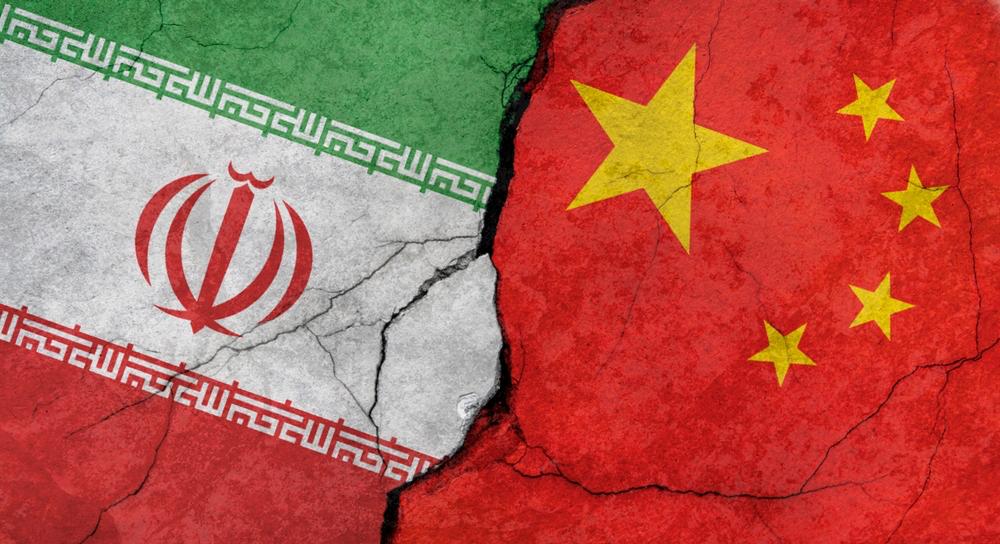
There is an important factor many people have missed about the conflict between the U.S., Israel, and Iran’s government: China. Over the past decade, China has increasingly supported Iran economically and militarily. These growing ties may help explain why the U.S. chose to launch a joint military operation with Israel against Iran’s regime.
Why would the U.S. go to war against Iran’s regime? #
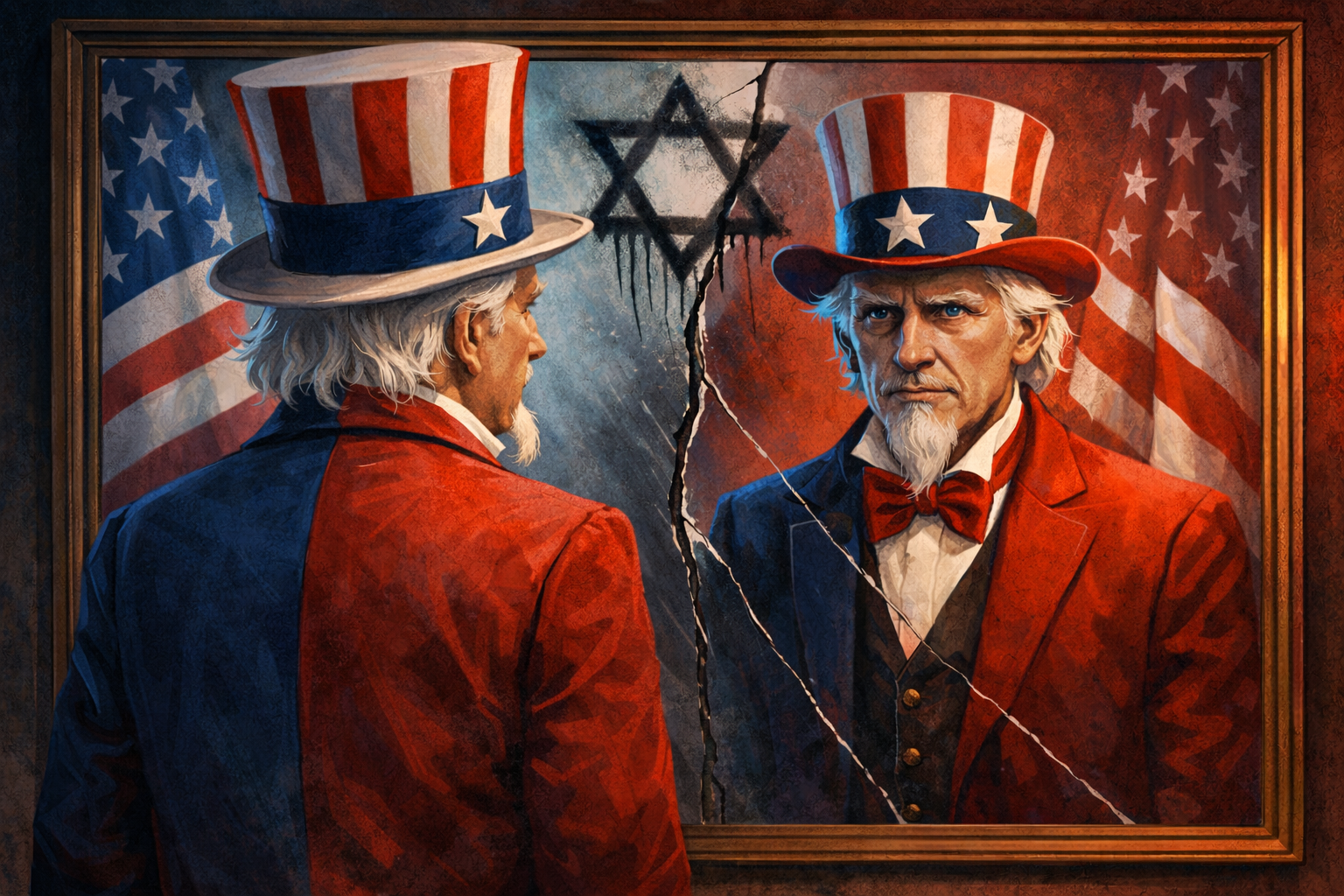
Iran’s regime, its allies, and some commentators claim that Israel “dragged America into war with Iran.” This narrative is misleading, fuels conspiracy theories that falsely blame Jews for global conflicts, and ignores very real threats to the U.S..
U.S. officials have stated that they launched Operation Epic Fury because Iran’s regime:
- Murdered and maimed thousands of Americans since taking power in the 1979 Islamic Revolution. This includes the 1979 U.S. Embassy hostage crisis, attacks by Iran-backed terrorist groups on U.S. forces across the Middle East, and assassination plots targeting American officials.[i]
- Calls for “death to America.”[ii]
- Has tried to build nuclear weapons.[iii]
- Is building a massive stockpile of ballistic missiles that can hit targets thousands of miles away.[iv]
- Continues to fund and arm U.S.-designated terrorist groups across the Middle East.[v]
- Refused to stop its nuclear enrichment, ballistic missile program, or support for terrorism, during negotiations with the U.S. aimed at preventing a war.[vi]
Do China’s ties to the Iranian regime play a role? #
Current U.S. officials have not mentioned China’s role as a reason for military action against Iran. However, some experts, including a former U.S. Deputy National Security Advisor, say Iran’s regime has become a key player in China’s efforts to surpass the U.S. as the world’s biggest superpower.[vii]
Iran’s government depends on China #
For many years, the U.S. and other countries have used economic sanctions to pressure Iran’s government to stop its nuclear program, ballistic missile threat, and sponsorship of terrorism. In response, Iran turned to China, which became one of the Iranian government’s most important sources of funding.
- China now buys about 90 percent of Iran’s oil exports, often at discounted prices.[viii]
- China benefits because Iran provides an inexpensive source of oil keep the Chinese economy running. Close to twenty percent of the oil China imports by sea reportedly comes from Iran.[ix]
- Some estimates suggest that about one-quarter of Iran’s national budget comes from trade with China – funding that helps the Iranian regime stay in power.[x]
Chinese and Iranian military ties #
Military cooperation between China and Iran has also grown.
- China has reportedly supplied critical chemicals that Iran’s military has used to build thousands of ballistic missiles.[xi]
- China was reportedly in talks to sell advanced missiles to Iran’s regime that can U.S. naval ships.[xii]
- The Iranian regime is also believed to use Chinese software that makes it harder for the U.S., Israel, and other countries to collect information about Iran’s military activities.[xiii]
China and Iran’s missile threat #
- When the U.S. and other countries negotiated the 2015 JCPOA agreement to limit Iran’s nuclear program, China and Russia reportedly helped prevent the deal from including restrictions on building ballistic missiles.[xiv] This allowed Iran to build an estimated 2,000 missiles, the largest arsenal in the Middle East.[xv]
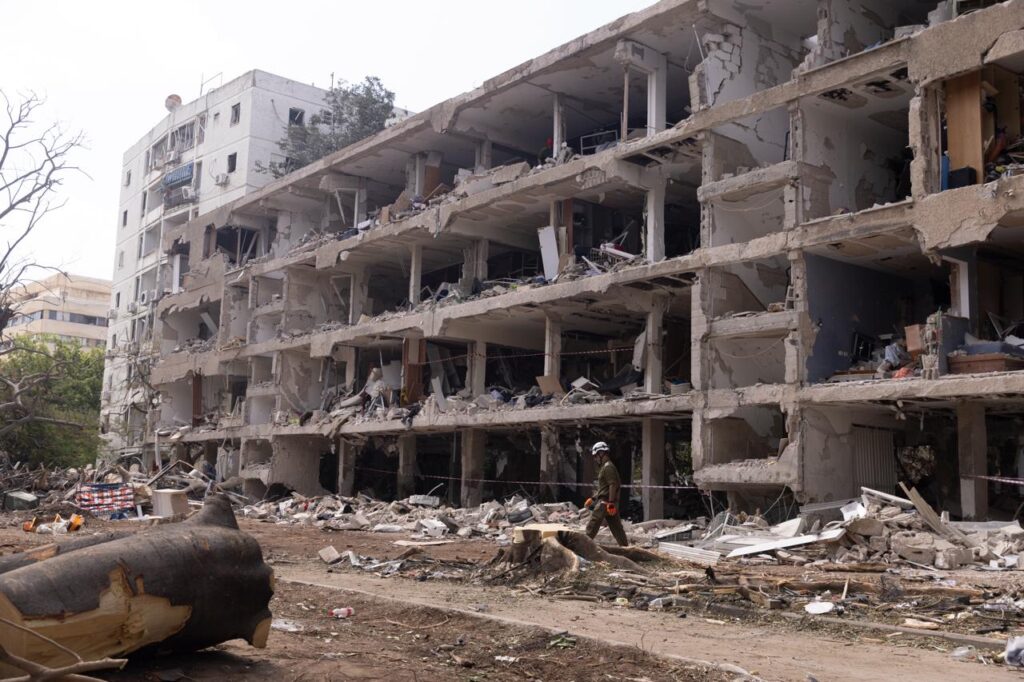
- The U.S. and its allies, including Israel, have defense systems that can intercept most incoming missiles. However, these systems are extremely expensive. The interceptors used to shoot down ballistic missiles reportedly cost between $1 million and $4 million each and are difficult to build.[xvi]
- Iran’s ballistic missiles are much cheaper and easier to make. With enough of these weapons, the Iranian regime could overwhelm even the most advanced defense systems and cause mass destruction.
U.S. leaders see China as their biggest threat #
Both Democratic and Republican leaders have said they believe China wants to surpass the U.S. and become the world’s dominant economic, political, and military superpower.
- One major concern is Taiwan, a self-governing island off the coast of China and a close U.S. ally. Taiwan is vital to the U.S. and global economy because it produces many of the advanced computer chips used in smartphones, computers, and vehicles. However, the Chinese government claims that Taiwan is part of China, and there are widespread concerns that they will invade the island in the future.[xvii]
Why does China’s relationship with Iran matter to the U.S.? #
- Experts say an Iranian regime with a growing nuclear program, large stockpile of advanced missiles, and network of powerful terrorist groups under its control could result in the U.S. draining financial and military resources in the Middle East for many years to come.[xviii]
- This could make it harder for the U.S. to respond quickly to other crises, including a possible conflict in Taiwan.
This is why some believe the U.S. may be trying to achieve two key goals in its joint military operations with Israel in Iran:
- End the major security threats Iran’s regime poses to Americans.
- Free up American resources to better protect Taiwan and the global economy, from possible aggression by China.[xix]
While not all experts agree with this analysis, it is important to consider when trying to understand the conflict between the U.S., Israel, and Iran’s regime.
Reject Hateful and Misleading Narratives About the War #
People can disagree about their government’s military and political decisions. However, there is no place for conspiracy theories that falsely blame Jews for global conflicts. Claims that the U.S. is fighting “Israel’s war” or is “controlled by Israel” echo centuries-old antisemitic myths that fuel discrimination and violence against Jewish communities. These narratives exploit fear and anger, while providing no real answers or solutions.
Iran’s regime has called for the destruction of both the U.S. and Israel since 1979. Now, the U.S. and Israel are fighting this regime together because they both believe it is in their own interest.
Sources: #
[i] The White House, “The Iranian Regime’s Decades of Terrorism Against American Citizens,” The White House, March 2, 2026, at https://www.whitehouse.gov/articles/2026/03/the-iranian-regimes-decades-of-terrorism-against-american-citizens/
[ii] https://www.instagram.com/reel/DK1EsC1CwlF/?igsh=MzRlODBiNWFlZA==
[iii] David Albright, Sarah Burkhard, and Spencer Faragasso, “Analysis of IAEA Iran Verification and Monitoring Report — May 2025,” Institute for Science and International Security, June 9, 2025, at https://isis-online.org/isis-reports/analysis-of-iaea-iran-verification-and-monitoring-report-may-2025; Rafael Mariano Grossi (@rafaelmgrossi), post on X, March 3, 2026, at https://x.com/rafaelmgrossi/status/2028922019279167849
[iv] Wisconsin Project on Nuclear Arms Control, “Table of Iran’s Missile Arsenal,” Iran Watch, updated continuously, at https://www.iranwatch.org/our-publications/weapon-program-background-report/table-irans-missile-arsenal
[v] Gabriel Noronha, “How America and Its Allies Can Stop Hamas, Hezbollah, and Iran from Evading Sanctions and Financing Terror,” Written Testimony before the U.S. House Committee on Financial Services, Subcommittee on National Security, Illicit Finance, and International Financial Institutions, October 25, 2023, at https://docs.house.gov/meetings/ba/ba10/20231025/116509/hhrg-118-ba10-wstate-noronhag-20231025.pdf
[vi] “US Official: We Offered Iran ‘Free Nuclear Fuel Forever’ but They Refused; They Wanted Enrichment for a Nuclear Bomb,” The Times of Israel, February 28, 2026, at https://www.timesofisrael.com/liveblog_entry/us-official-we-offered-iran-free-nuclear-fuel-forever-but-they-refused-they-wanted-enrichment-for-a-nuclear-bomb/
[vii] Zineb Riboua, “The Iran Question Is All About China,” Beyond the Ideological, February 28, 2026, at https://www.zinebriboua.com/p/the-iran-question-is-all-about-china;”U.S. Insiders See Iran War Hurting China-Backed ‘Axis of Chaos,'” The Japan Times, March 5, 2026, at https://www.japantimes.co.jp/news/2026/03/05/world/politics/us-iran-china-axis-chaos/; Haviv Rettig Gur, This Isn’t Israel’s War. It’s America’s, The Free Press, March 3, 2026, at https://www.thefp.com/p/this-isnt-israels-war-its-americas
[viii] Zineb Riboua, The Iran Question Is All About China, Beyond the Ideological, February 28, 2026, at https://www.zinebriboua.com/p/the-iran-question-is-all-about-china
[ix] Alexandra Stevenson and Murphy Zhao, For China, Billions of Dollars Are at Risk From a Widening War, The New York Times, March 9, 2026, at https://www.nytimes.com/2026/03/09/business/china-trade-persian-gulf-iran.html
[x] Haviv Rettig Gur, This Isn’t Israel’s War. It’s America’s, The Free Press, March 3, 2026, at https://www.thefp.com/p/this-isnt-israels-war-its-americas
[xi] Melissa Bell and Gianluca Mezzofiore, “Western Intelligence Says Iran Is Rearming Despite UN Sanctions, with China’s Help,” CNN, October 29, 2025, at https://www.cnn.com/2025/10/29/middleeast/iran-rebuilding-ballistic-weapons-program-intl
[xii] John Irish, Parisa Hafezi, and Gavin Finch, “Iran Nears Deal to Buy Supersonic Anti-Ship Missiles from China,” Reuters, February 24, 2026, at https://www.reuters.com/world/china/iran-nears-deal-buy-supersonic-anti-ship-missiles-china-2026-02-24/
[xiii] Haviv Rettig Gur, This Isn’t Israel’s War. It’s America’s, The Free Press, March 3, 2026, at https://www.thefp.com/p/this-isnt-israels-war-its-americas
[xiv] Zineb Riboua, Under Beijing’s Wing: Iran’s Arsenal, Beyond the Ideological, March 3, 2026, at https://www.zinebriboua.com/p/under-beijings-wing-irans-arsenal
[xv] Zineb Riboua, Under Beijing’s Wing: Iran’s Arsenal, Beyond the Ideological, March 3, 2026, at https://www.zinebriboua.com/p/under-beijings-wing-irans-arsenal
[xvi] Zineb Riboua, Under Beijing’s Wing: Iran’s Arsenal, Beyond the Ideological, March 3, 2026, at https://www.zinebriboua.com/p/under-beijings-wing-irans-arsenal
[xvii] Zineb Riboua, The Iran Question Is All About China, Beyond the Ideological, February 28, 2026, at https://www.zinebriboua.com/p/the-iran-question-is-all-about-china
[xviii] Zineb Riboua, Under Beijing’s Wing: Iran’s Arsenal, Beyond the Ideological, March 3, 2026, at https://www.zinebriboua.com/p/under-beijings-wing-irans-arsenal
[xix] Zineb Riboua, Under Beijing’s Wing: Iran’s Arsenal, Beyond the Ideological, March 3, 2026, at https://www.zinebriboua.com/p/under-beijings-wing-irans-arsenal