By Carly F. Gammill | The Jerusalem Post | November 24, 2025
The recent decision by the United States Court of Appeals for the First Circuit, affirming the dismissal of a complaint on behalf of MIT students, is deeply troubling for anyone concerned about protecting civil rights on campus. In particular, the court’s misguided pronouncement about the nature and definition of contemporary antisemitism could have a dangerous impact on Jewish and non-Jewish students alike.
The complaint included a claim under Title VI of the Civil Rights Act of 1964, alleging a hostile climate that resulted from a campaign of harassment and intimidation targeting a core component of the identity of most Jews: Zionism. Led by students, faculty, and outside agitators, the campaign began immediately after October 7, 2023, continuing for several months.
The court’s analysis, however, demonstrates a fundamental misunderstanding of this aspect of Jewish identity and, thus, how attacks against it manifest today.
The court’s erroneous conclusion that the incidents detailed in the complaint “were not, by and large, antisemitic,” but merely “political protests” tracks with the confusion I regularly encounter – about the nature of both Jewish ancestral identity and the campaign to politicize that identity to provide cover for anti-Jewish bigotry.
‘Aha’ moment
My “aha” moment surrounding this issue came during a recent educational program for a group of campus administrators.
I began that program as I often do: discussing the prevalence and contours of contemporary antisemitism. I explained that to truly understand antisemitism, we must first understand the identity that antisemitism attacks: Jewish identity.
Yet, when I started to talk about Zionism as an aspect of that identity, the disconnect was palpable. There wasn’t verbal disagreement or pushback, but it was clear that I was speaking a language foreign to the audience.
To pinpoint the precise point of departure, I asked them: “By a show of hands, how many of you, when you hear the word ‘Zionism,’ automatically associate it in your mind with Judaism or the Jewish community?” Very few hands went up. I was puzzled. I asked the same question, but associating Zionism with Christianity or the Christian community. Even fewer hands.
Ignorant about ‘Zion’
Then it hit me. I asked, “How many of you, when you hear the word ‘Zionism’ automatically associate it in your minds with politics?” Every hand in the room went up. I realized there was one more critical piece to this puzzle. “How many of you,” I asked, “are familiar with the stand-alone term ‘Zion’?” Not a single hand went up.
They did not know that Zion is an actual location in Israel (Mount Zion) with deep historical significance to the Jewish People, indeed, often used interchangeably with the word “Israel” itself. They did not know that Zionism is integral to the identity of Zionists, the people from Zion. This, in turn, left them entirely vulnerable to the popular narrative that seeks to divorce Zionism from the Jewish People and recast it as merely a matter of politics.
It was instantly clear that this group – like so many others – had only one frame of reference for the term “Zionism,” namely, the libelous campaign of anti-Zionism.
Erasing history
This dangerous effort aims to erase the 3,000+ year history of the Jewish People in Israel and then – based on an erroneous, ahistorical premise – libelously accuses the Israeli government of a host of evils, including genocide, apartheid, and ethnic cleansing.
Finally, anti-Zionism conflates the Jewish ancestral connection to the land of Israel with political support for such alleged abuses, thus coopting and converting the term “Zionism” from its true meaning into a four-letter word.
The First Circuit’s decision follows the trajectory of this well- and oft-told lie, concluding that the rampant anti-Zionism detailed in plaintiffs’ complaint (with a few isolated exceptions) was merely the expression of political views, entirely missing that anti-Zionism is, fundamentally, not merely about politics but about attacking and undermining Zionist identity, which is highly intertwined with the identity of most Jews.
Indeed, our complaint explained in detail how antisemitism has evolved over time and how today, anti-Zionism functions as antisemitism.
To say so still leaves ample room for critical debate about actual matters of politics that do not constitute discrimination. However, legitimate political criticism is not what happened at the Massachusetts Institute of Technology. Purely political speech did not cause Jewish students to drop out of school or take different routes to class.
Forced relocation
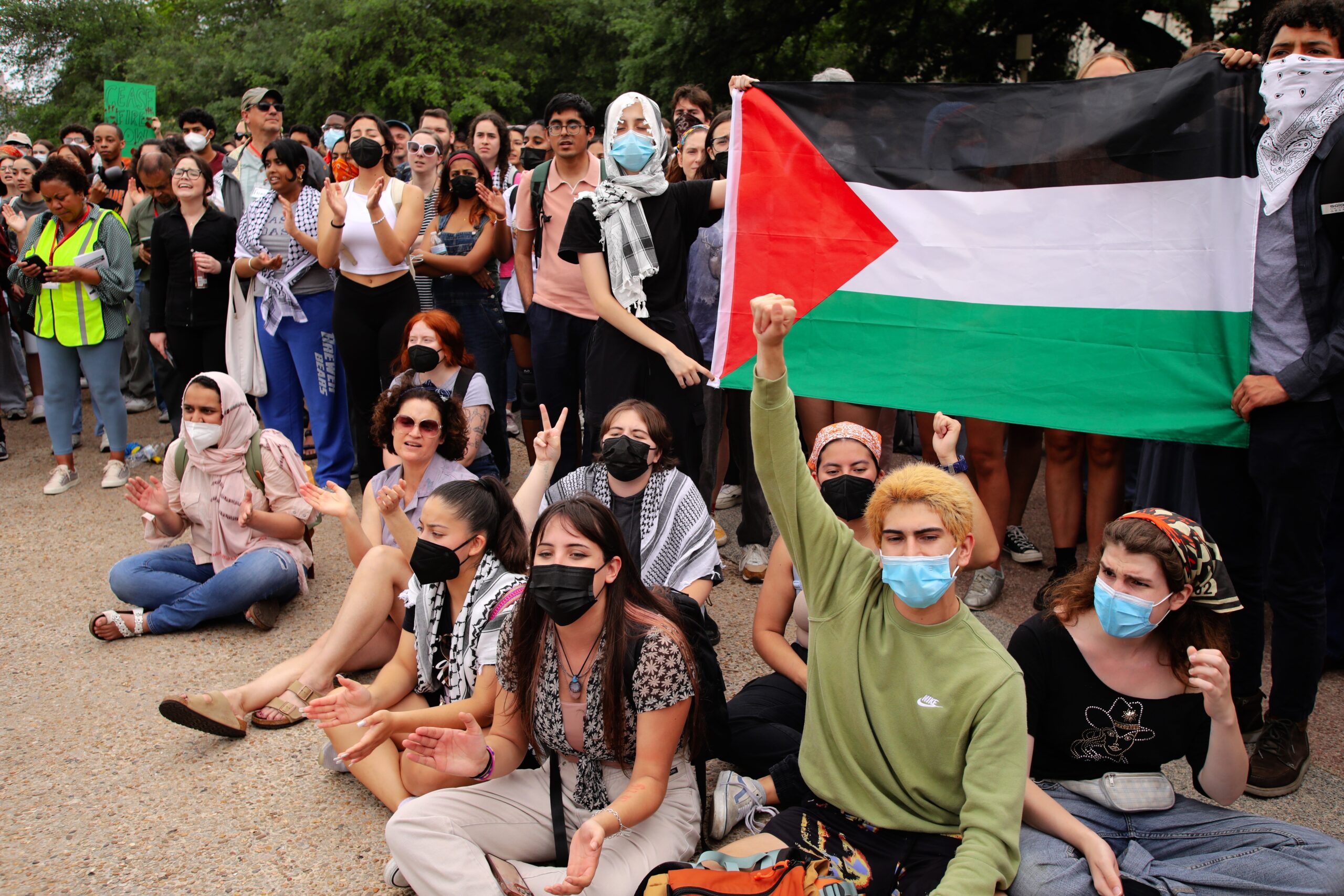
It does not involve setting up encampments right outside of identifiable Jewish spaces on campus. Purely political speech does not force students to relocate religious observances, such as their Passover seder.
It was anti-Zionist harassment – repeated attacks against the existence of the Jewish state of Israel and those whose ancestral identity is connected to Israel – that did those things at MIT. It is deeply unfortunate that the court chose to write this off as mere “speech,” ignoring the hostile actions that so detrimentally impacted the college’s Jewish students.
We can – and must – do better if we are to uphold equal treatment for Jews on campus. That starts with listening to the Jewish People about who they are and what that means, including when it comes to their Zionist identity.
The writer is executive director of the StandWithUs Center for Legal Justice. StandWithUs is a 24-year-old international nonpartisan education organization that supports Israel and combats antisemitism. Standwithus.com